
Carefully cultivation and production by hand
The Ultimate Japanese Rice


We cultivate Japanese rice, often called
“God’s blessing,” with more care
and effort than anyone else.
To create exceptional Japanese rice,
we employ productionmethods used
only by select farmers in Japan.
To enhance the taste and quality, and
to ensure you enjoy the sweetness, subtle aroma,
and chewy texture, we create a special fermented
fertilizer using fish, crab, and potatoes
to eliminate bitter or dusty odors.
To improve health and quality, we use
microbial materials made from natto bacteria
and noni fruit to decompose chemical
substances in the soil during production.
These layers of ingenuity and daily efforts
create the taste, aroma, and texture of
our current Kagayaki rice.

God’s Grace
In Japan, rice has been cherished since
ancient times as a “blessing from the gods.”
Furthermore, Japanese rice is said to have
the effect of nourishing vital energy
and enhancing life force.
Japanese Culture
Along with sushi, kimono, sumo wrestling,
Mount Fuji, shrines, samurai, Japanese swords,
and anime, “Japanese rice” is one of the symbols
of Japanese culture. With its subtly sweet aroma
and soft texture, it is now enjoyed by people all over
the world, especially through sushi. And it is said
that Japanese rice holds the secret to the longevity
of the Japanese people.
Unique
Kagayaki is cultivated using natural farming
methods, selecting high-quality seeds after each
harvest for the next planting. Kagayaki is
a unique Japanese rice variety, possessing its
own distinctive selection of seeds
and cultivation methods.
Because we protect our seeds and cultivate
them with more care than anyone else,
we cannot produce large quantities.
A special Japanese rice, available in
limited quantities and only for
a limited time—that is Kagayaki.

A scene of sorting rice seeds
(seeds for rice planting).
Ultimate Japanese Rice
Kagayaki Rice is the ultimate Japanese rice,
cultivated using natural farming methods
and employing a unique production system,
along with 10 unique evaluation criteria for aroma,
taste, texture, mouthfeel, safety, and price,
which are used as shipping standards.
Three types of specially developed organic
fertilizers are used in cultivation.
These include:
“Fermented Nutrient Fertilizer” made from natural
materials such as fish, crab, kelp/seaweed, potatoes, rice bran, natto, and
charcoal—materials used only in some
ultra-premium Japanese rice
varieties in Japan.
“Special Photosynthetic Bacteria Fertilizer” that
purifies the waterin the rice paddies and produces
nitrogen fertilizer from the air.
“Natto Bacteria Microbial Material” that promotes
the decomposition of chemical substances in
the soil and enhances fertilizer absorption.
All three of these organic materials are handmade
and used appropriately to prevent bitter or dusty
smells and to ensure that even a small amount
of chemical substances do not enter the
customer’s body, simultaneously improving both
“taste quality and health quality.”
Quality evaluation standards and shipping standards
The following are the “10 Unique Quality
Evaluation Criteria” for Kagayaki rice:
1. You can feel the soft, sweet aroma when it’s freshly cooked.
2. You can feel a subtle sweetness when you put it in your mouth.
3. You can feel the chewy texture when you bite into it.
4. You can feel the smooth texture as it goes down your throat.
5. You can feel the clean aftertaste.
6. The taste and quality have been recognized by top Japanese chefs.
7. A taste that you will never tire of and will be loved for many years.
8. You can feel yourself becoming healthier with every bite.
9. It is made using materials that decompose chemical substances in the soil.
10. We maintain high quality while safeguarding the livelihoods of farmers, and set prices that make it easy for customers to purchase our products.
All Items Are Sorted By Hand.
Because Kagayaki Rice is produced in Indonesia,
it is inan environment where other
rice varieties are easily mixed in.
We want our customers to enjoy the purest taste
and aroma of Japanese rice, and with that in mind,
we have been using the most labor-intensive method of “100% hand-sorting”
every day since the start of production.
We will continue to strive to deliver the
authentic taste of Japanese rice.
Support Quality Farmers
A good farmer is someone who
sincerely thinks about their customers,
produces delicious agricultural products with
minimal use of chemicals, and faithfully
keeps their promises even without having
to state them in words.
The rice produced by such farmers
is an important food that helps maintain our health
and keeps our bodies in good condition.
“We cannot produce safe and high-quality rice
by reducing payments to farmers.”
“Protecting good farmers means protecting our customers.”
This is what we believe.
If we try to reduce the amount paid to farmers,
even by a small margin, farmers will inevitably use
morechemicals in order to increase their yield.
If the amount of chemicals consumed by
customers increases,nthe possibility of
customers becoming ill will also increase.
If we want farmers to produce truly excellent rice,
we must first ensure that farmers’ livelihoods
are properly protected, and then have them
produce rice that is both delicious and safe.
This is our philosophy, and we believe
it represents the true value of the rice
we provide to our customers.
Through our food products, we sincerely hope to
bring happiness to our customers, and at
the same time,we hope to contribute
to their health and well-being.
We proudly present Kagayaki Rice,
whose taste quality and health quality
have been improved through many years
of continuous refinement.
We sincerely appreciate your trust
and support for Kagayaki Rice.

Sejarah Bisnis Beras Jepang
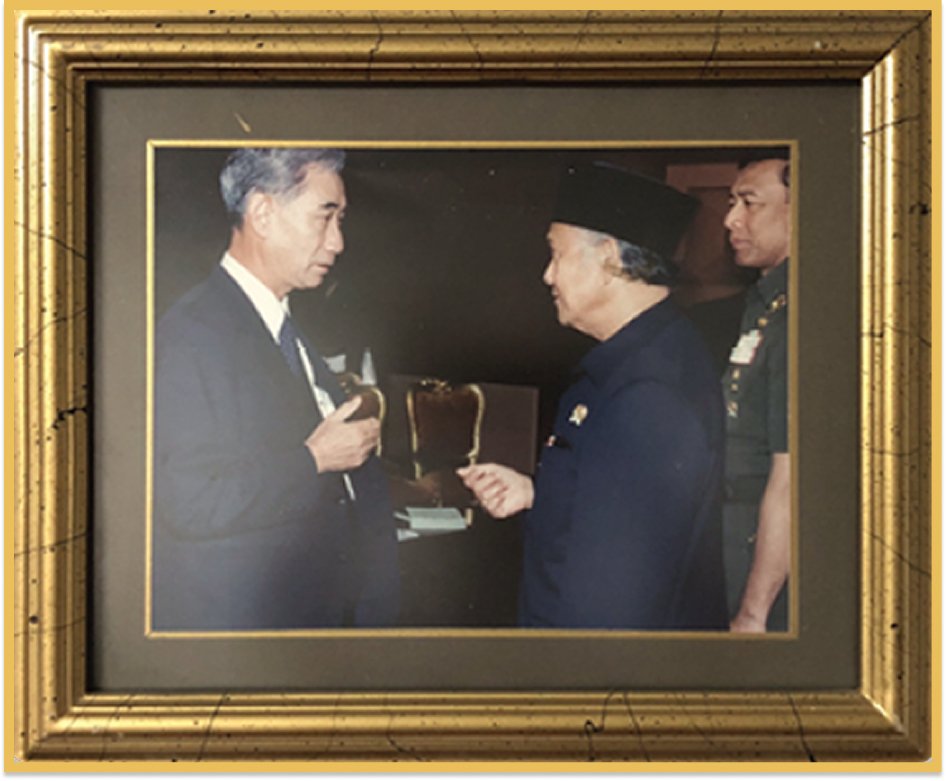
PT. Kondo International
Founded by Tetsuo Kondo
and former President Habibie
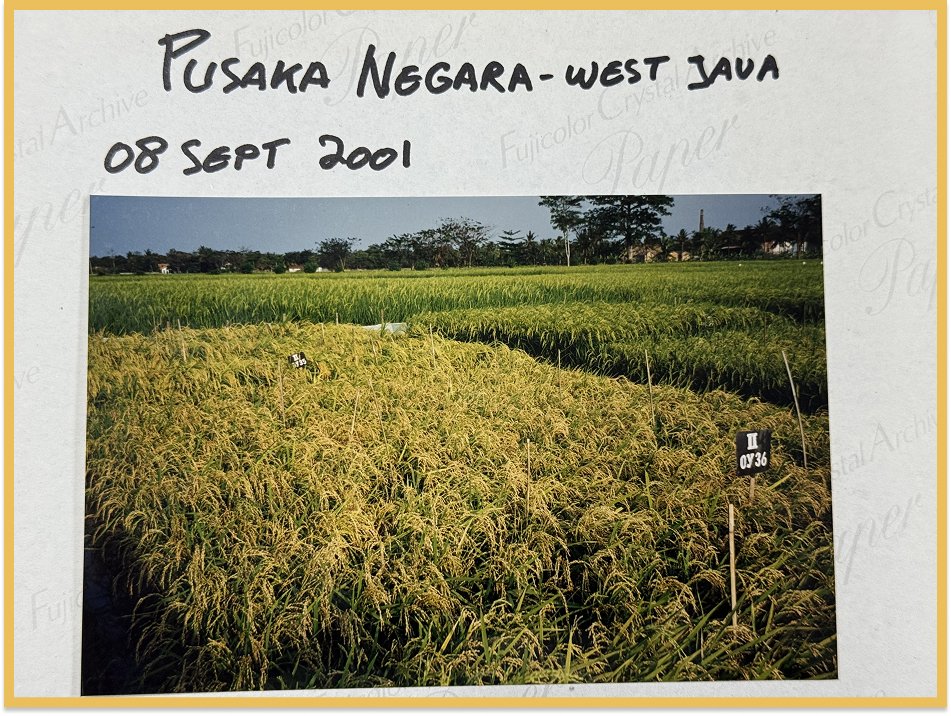
Hybrid Rice MIKI
OfficiallyCertified
Trial Cultivation
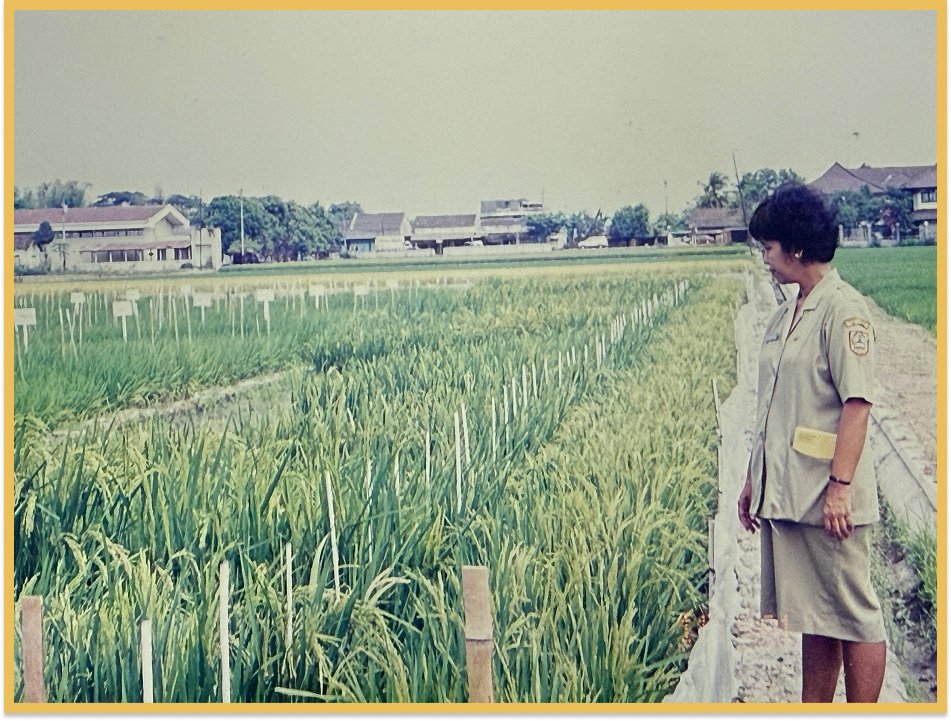

Hybrid Rice
MIKI Certification Inspection
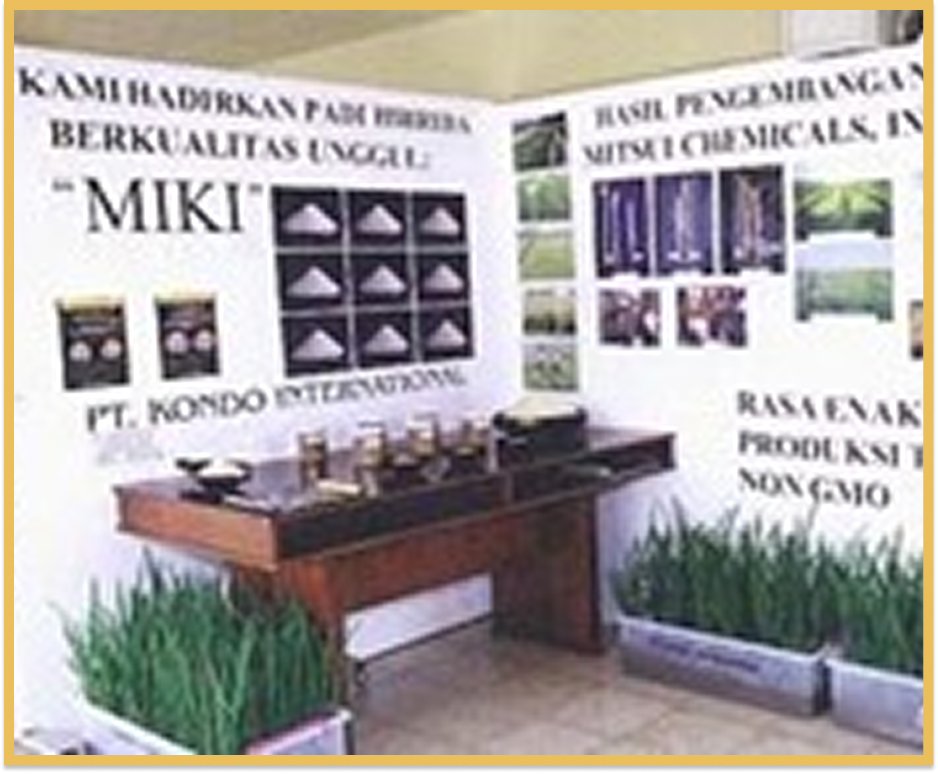
MIKI
announcement
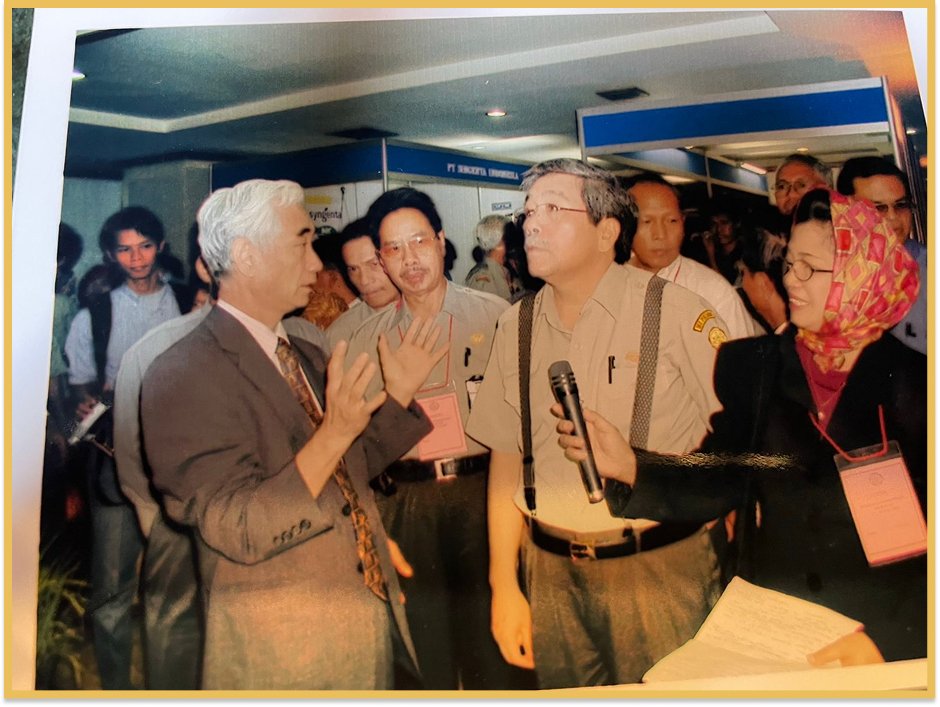
Minister’s
Inspection
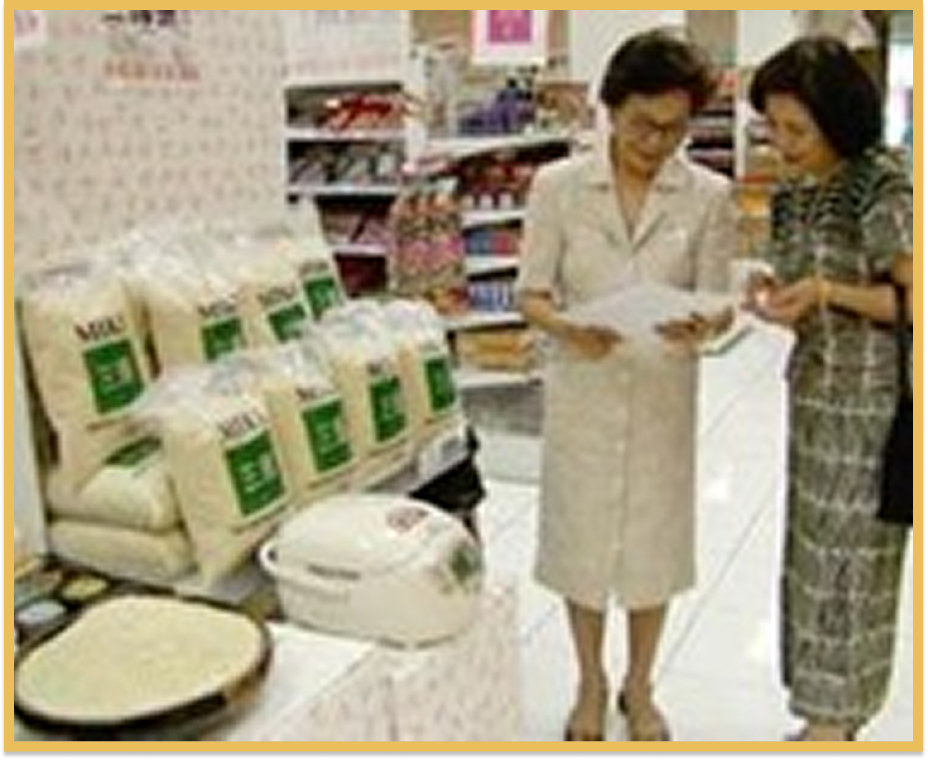

MIKI Official Sales
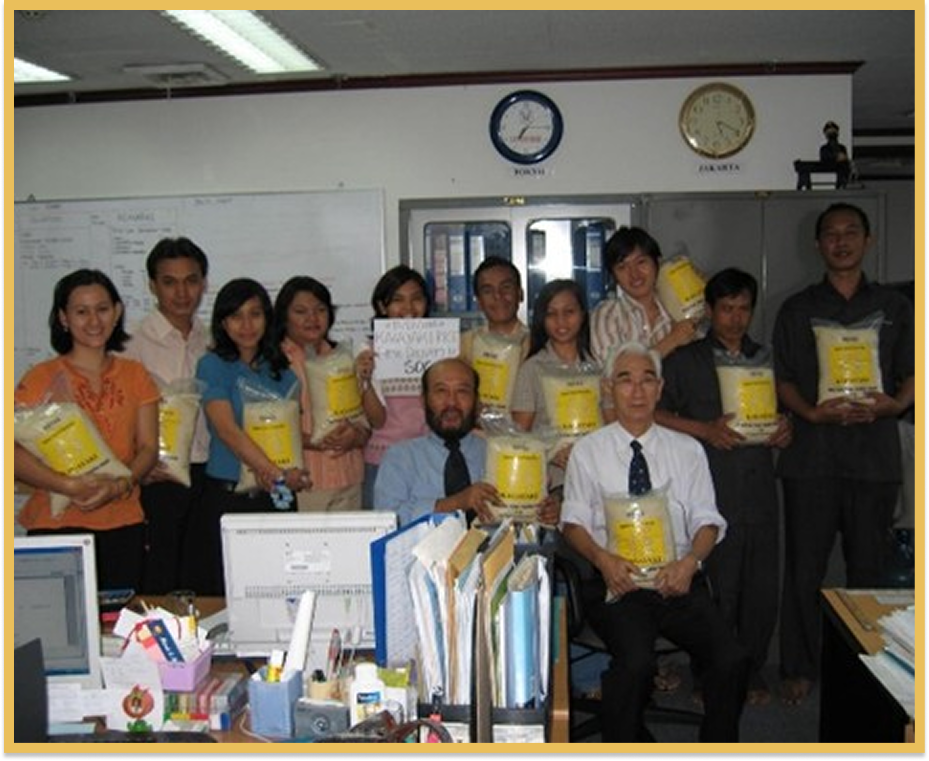

Kagayaki officially
announced
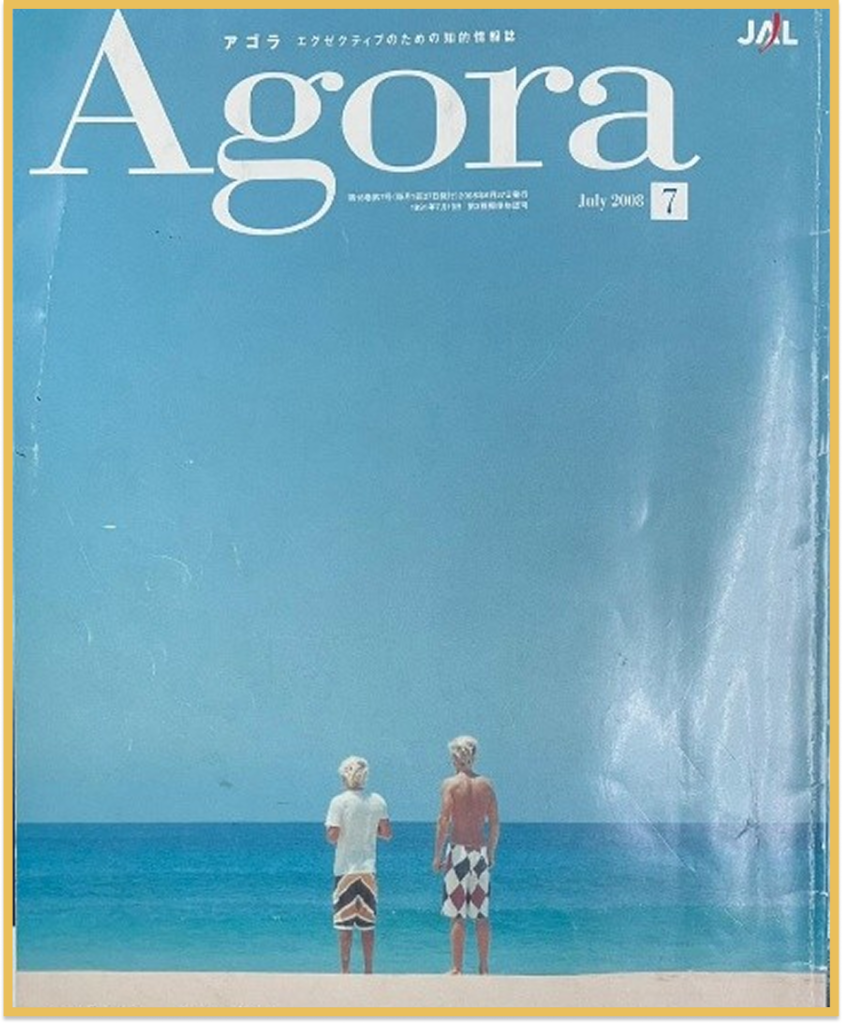
JAL In-Flight
Magazine AGORA
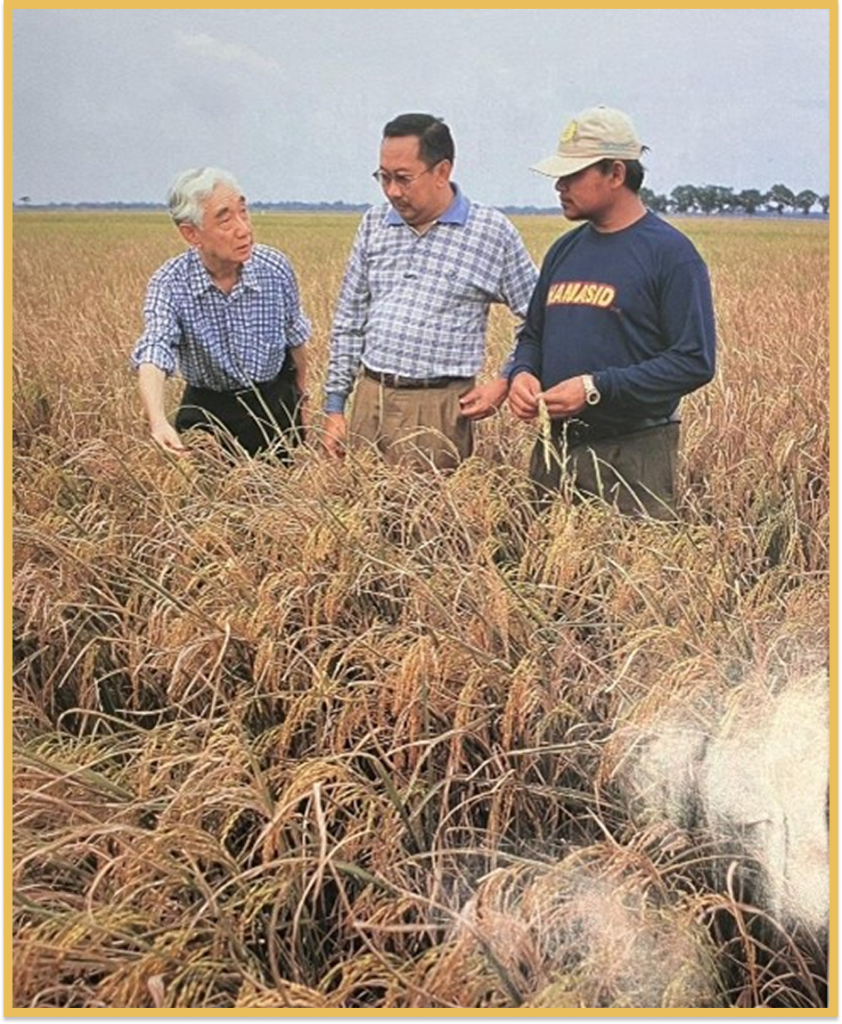
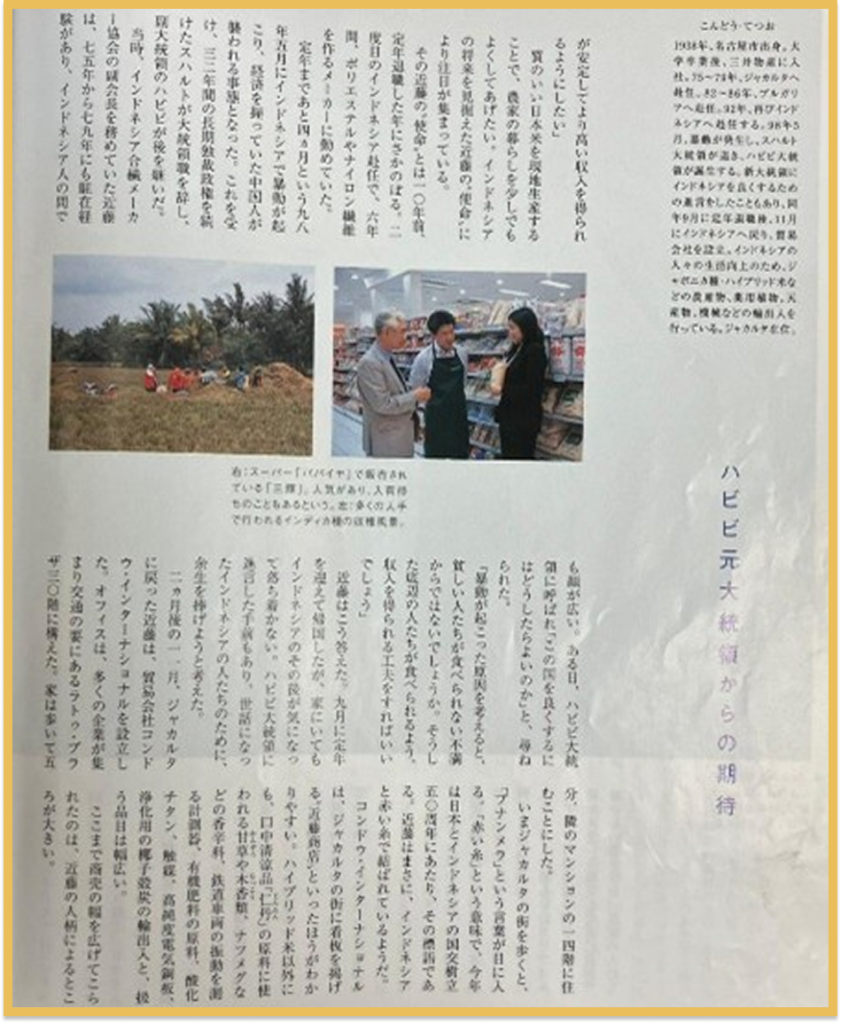

Former Hotel Nikko
Jakarta Exhibiting
at a trade show

Exhibiting at the
Jakarta Japan Festival
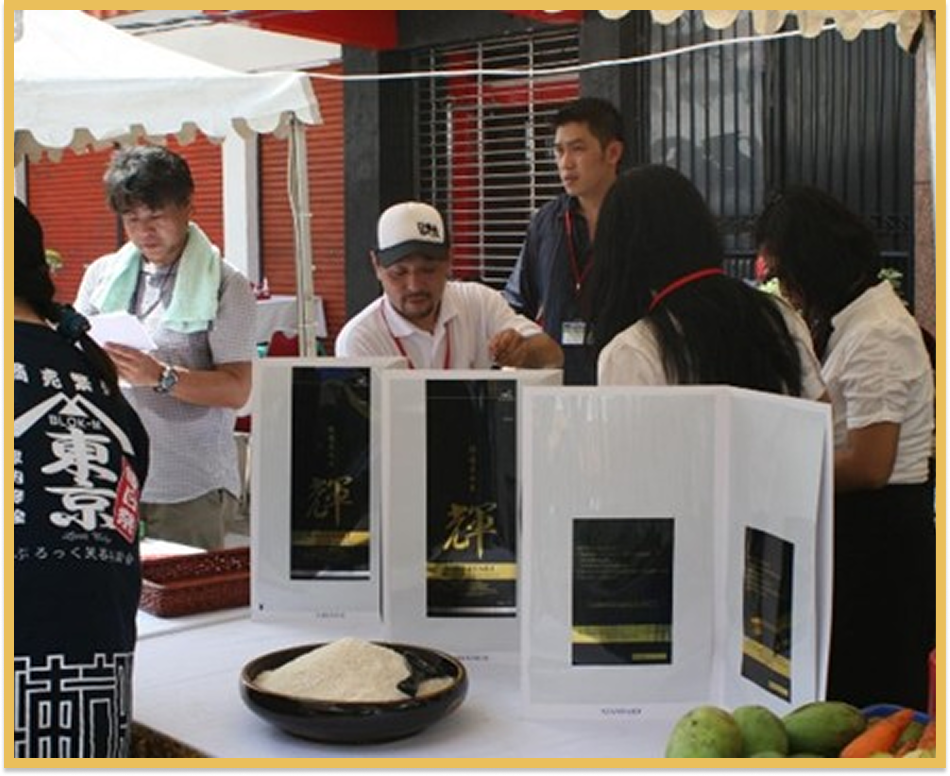
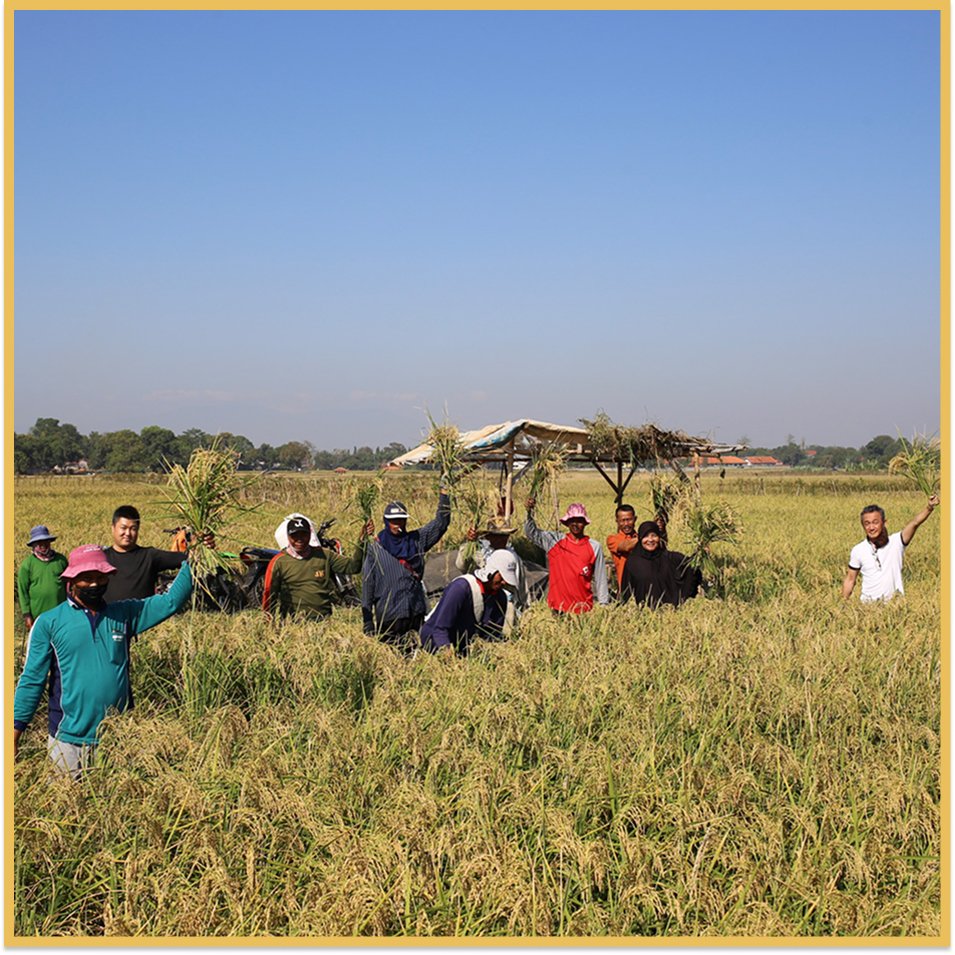

Hotel Kempinski Chef
and Rice Harvesting

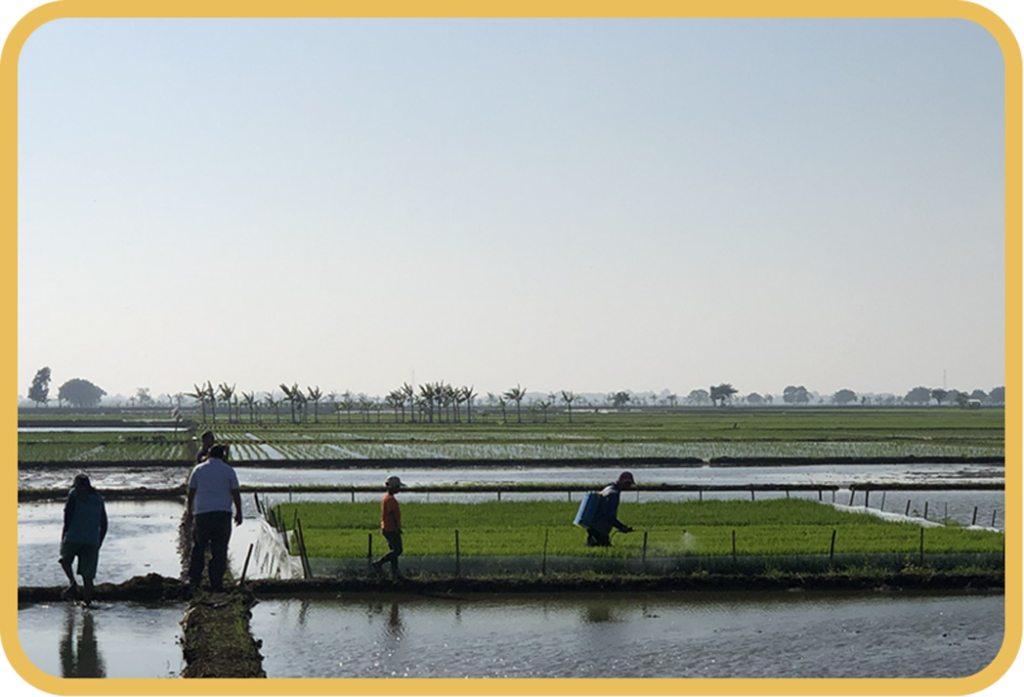
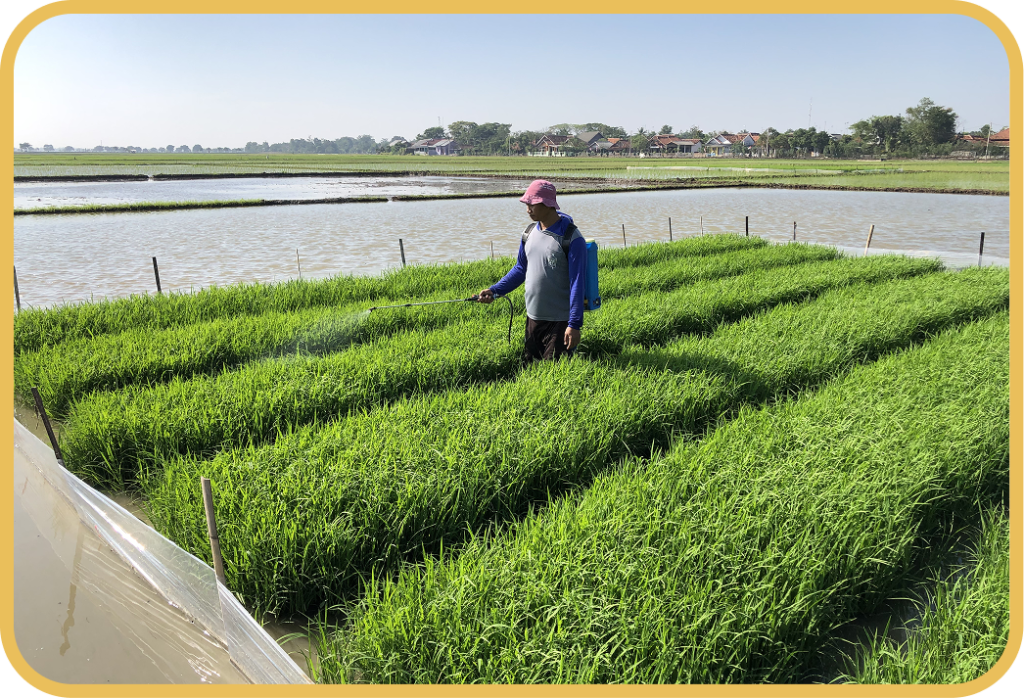
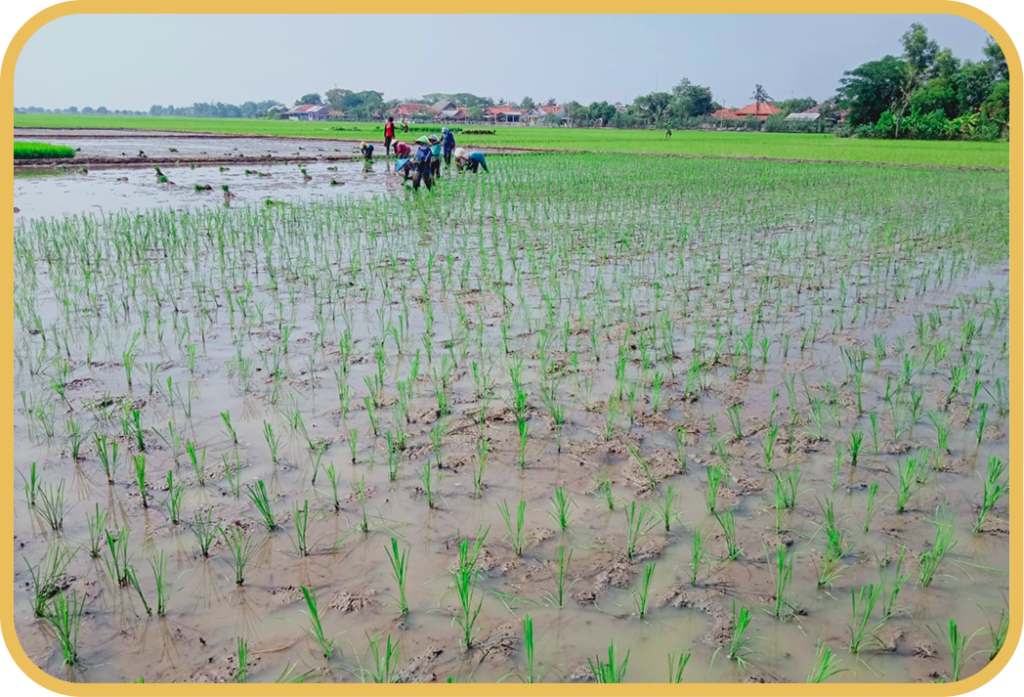
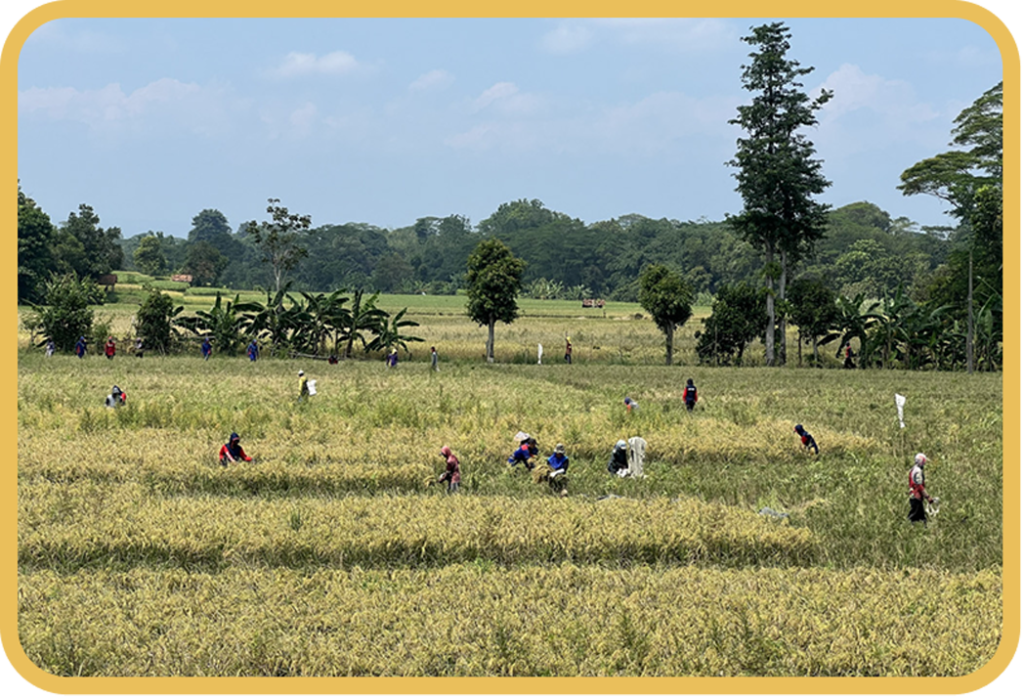
Production Site Scenery
(Cultivation Area)
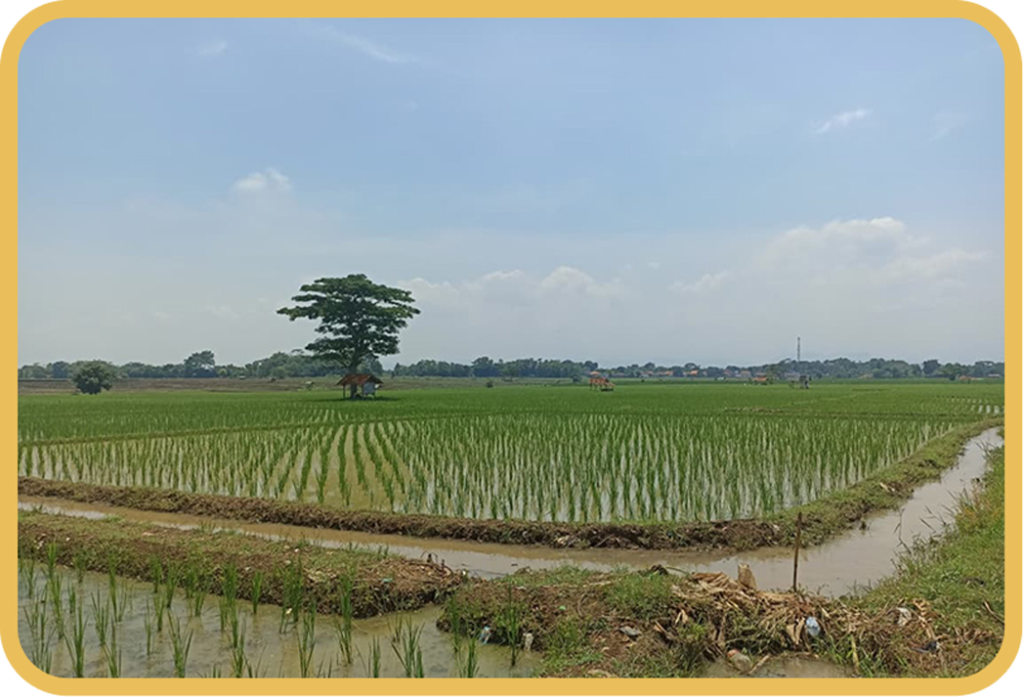
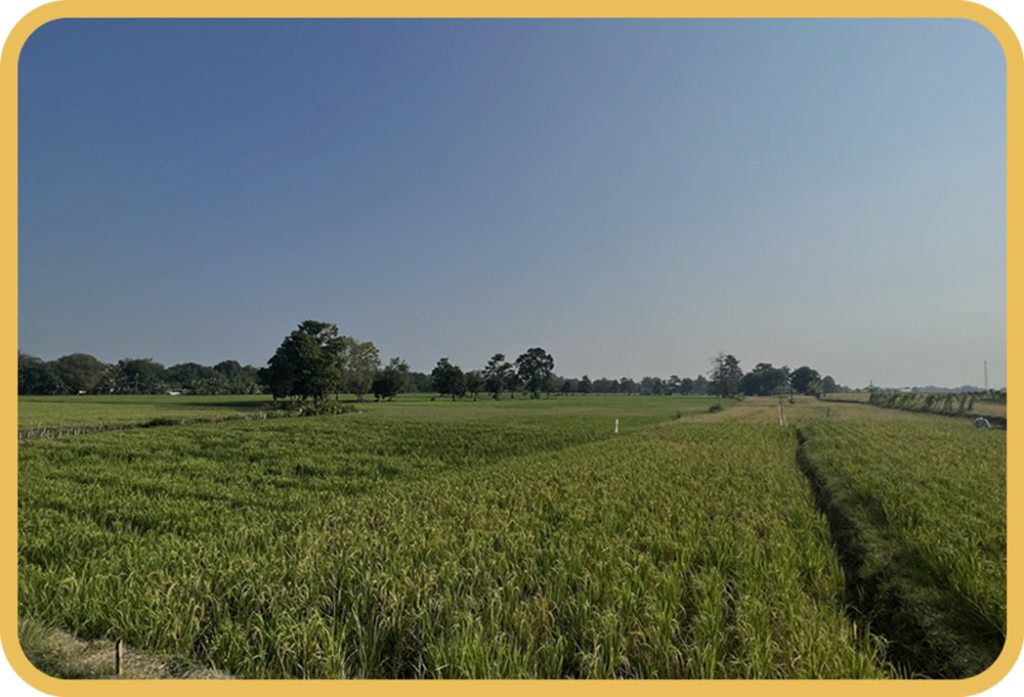
(Factory)

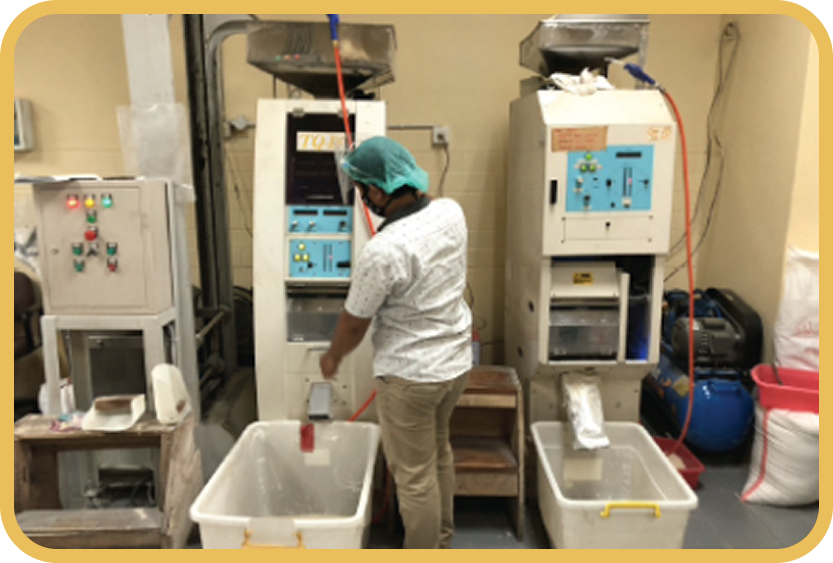
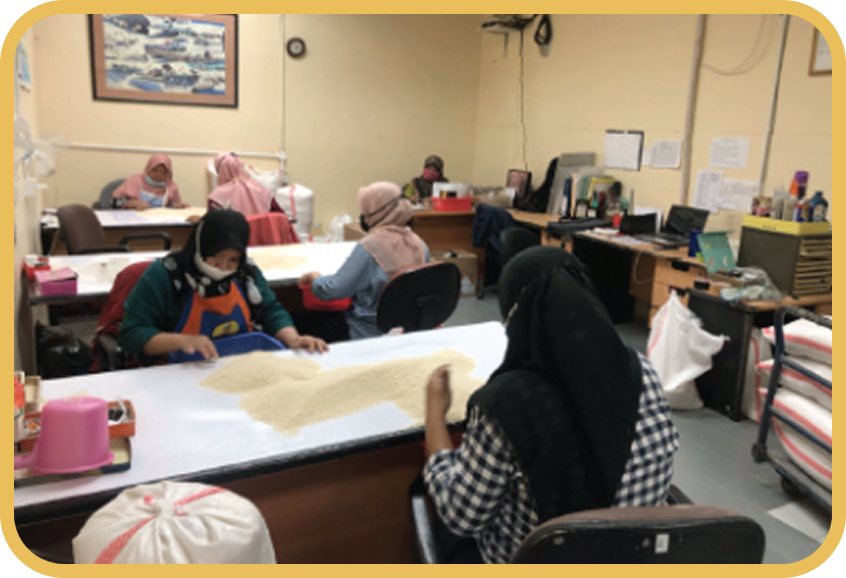
Specialized Fertilizers and Chemical Decomposition Materials
The specialized fertilizers and chemical-degrading agents are all made from natural materials.
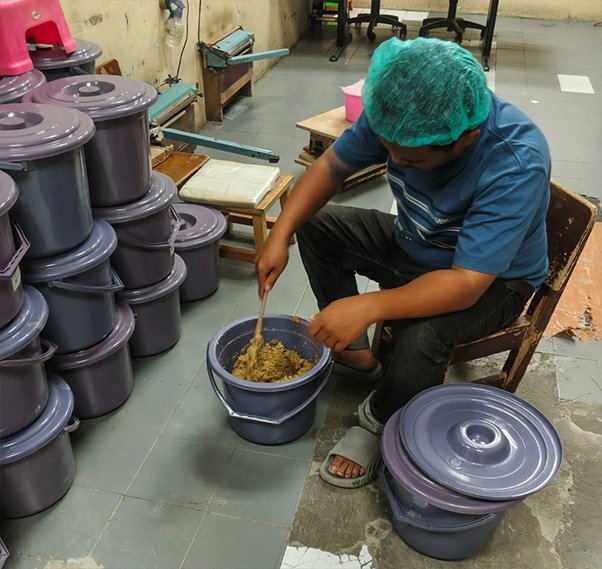
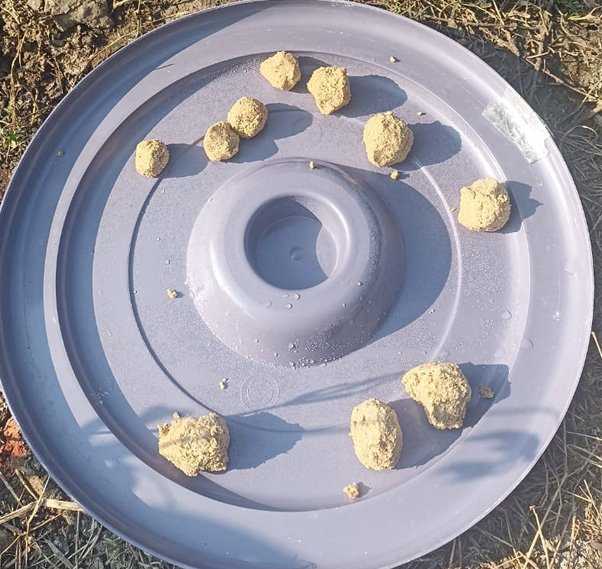
【 Fermented Nutrient Fertilizer】
For each season, we handcraft a fermented nutritional
fertilizer designed to enhance flavor and apply it to our crops.
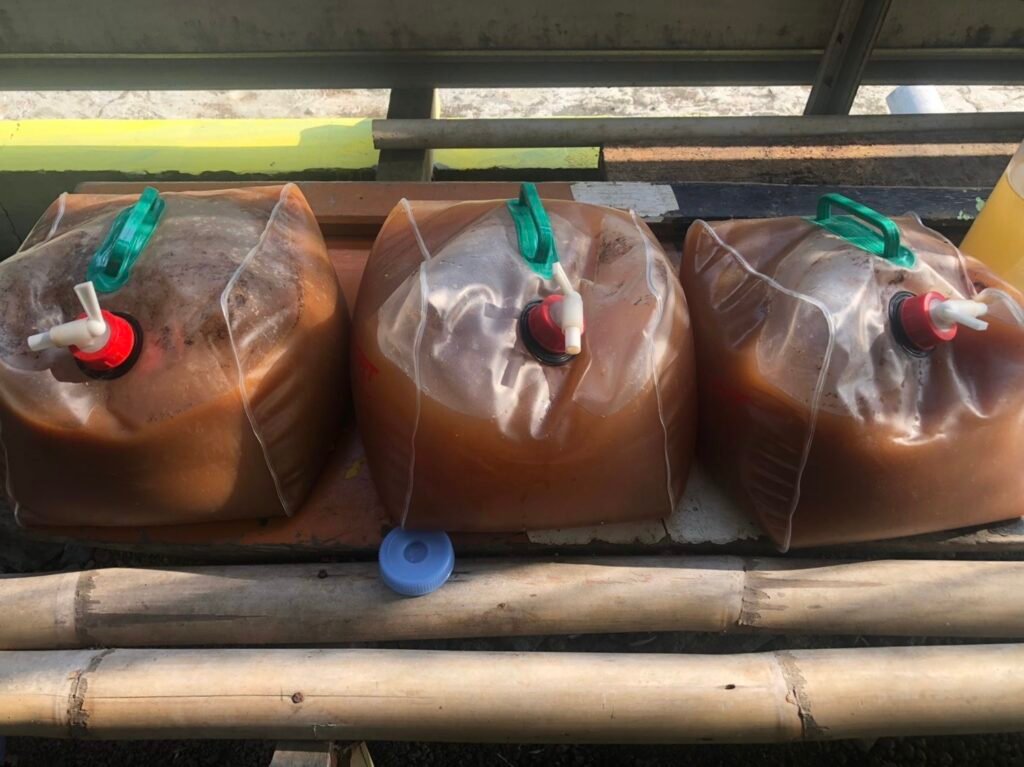
【 Special photosynthetic bacteria fertilizer】
This is a photosynthetic bacterial material developed
and manufactured specifically for Kagayaki Rice.
It purifies the water in rice paddies and
simultaneously supplies nitrogen from
the air as fertilizer to the rice plants.
【 TOWA Natto Bacteria Microbial Material 】
It breaks down chemical substances
in the soil, producing crops with
reduced levels of these substances.
At the same time, it breaks down fertilizer
components in the soil, rapidly delivering
nutrients to the crops, producing rice
withs high nutritional value and taste.
List of Licenses
Kagayaki is produced and sold under the following official licenses:
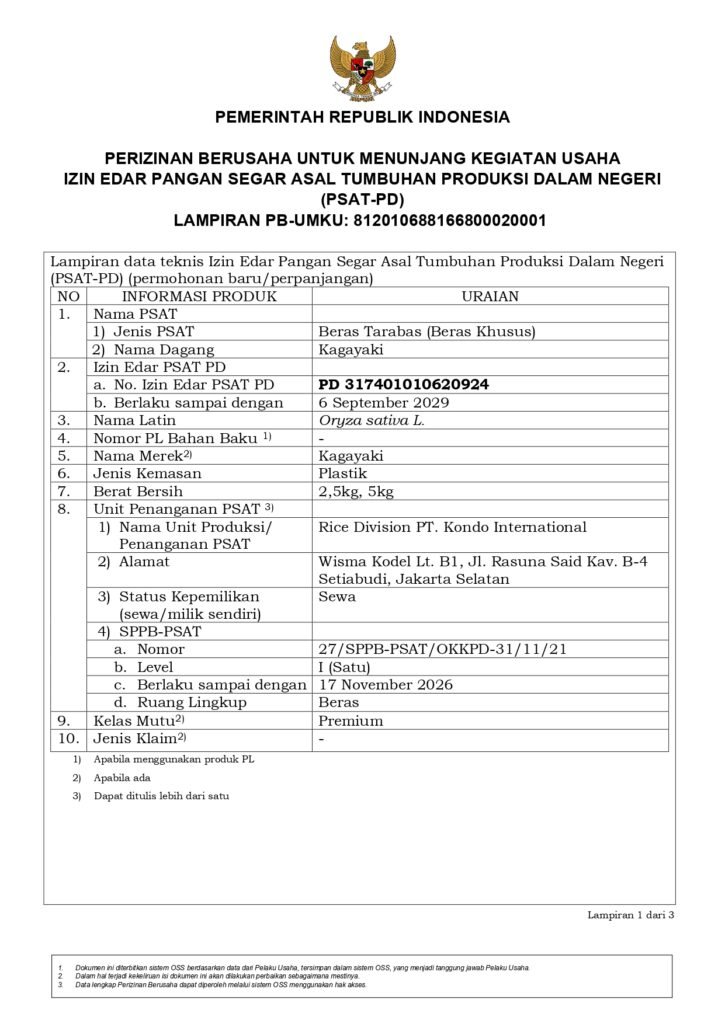
PB UMKU – Domestic Plant-Based Fresh Food
Distribution Permit (PSAT-PD)
PB UMKU – PSAT-PD guarantees the safety, quality,
and legality of reliable, locally produced umkuchen in its distribution.
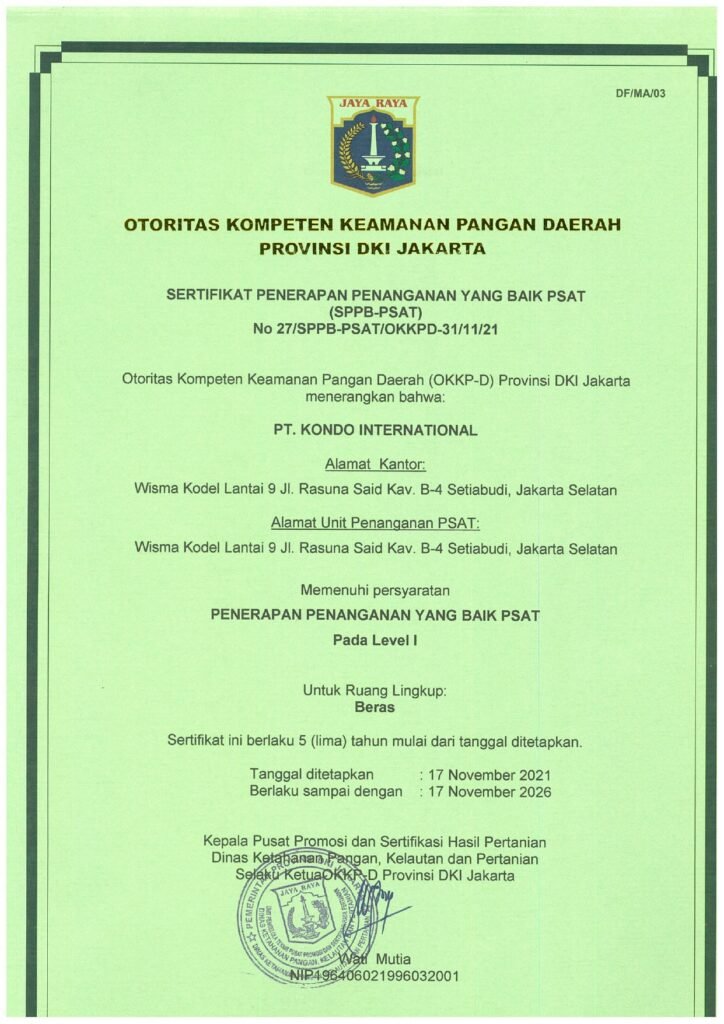
PSAT Proper Handling Certificate (SPPB PSAT) – Jakarta Special
Capital Region Health Department (DKI Jakarta OKKPD)
SPPB PSAT – OKKPD DKI Jakarta certifies the hygiene and quality
standards of “Kagayaki” from packaging to distribution.
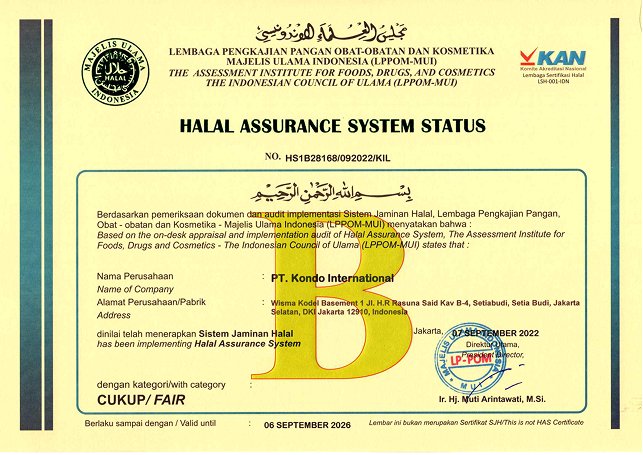
Halal Assurance System (HAS) Status
Halal Assurance System (HAS) certification demonstrates
the commitment, consistency, and compliance with halal
standards in the production process of “Kagayaki” rice.
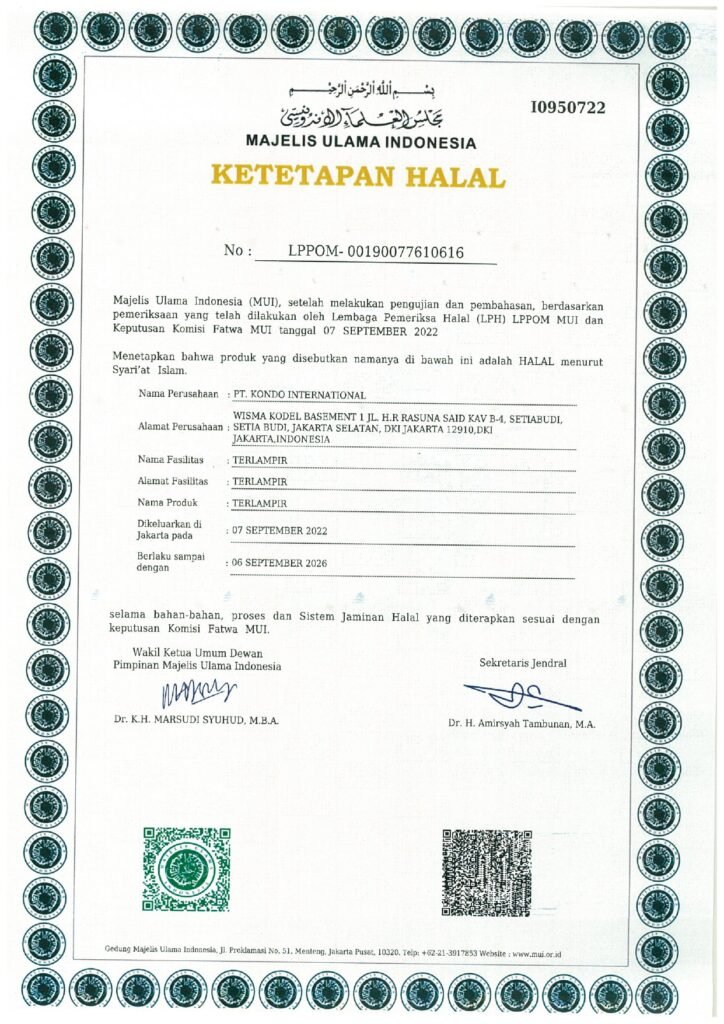
Halal Certification Decision
This halal certification decision officially certifies that “Kagayaki” meets halal standards based on Islamic law.
This provides legal certainty regarding the
product’s halal nature and reassures consumers.
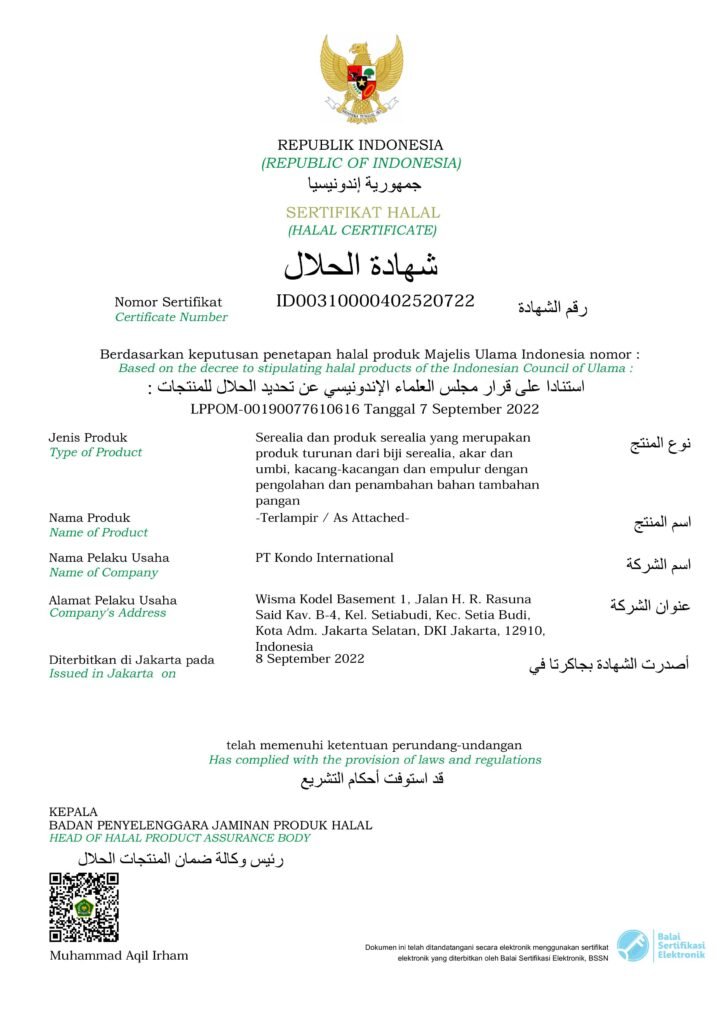
Halal Certification
Based on Islamic law, this certificate guarantees the halal certification and quality of “Kagayaki” rice, providing consumers with peace of mind and building social trust.
Various Analyses and Tests
Kagayaki Rice conducts “comparative cultivation tests,”
“simultaneous pesticide residue tests,” “corrosion tests,”
and “long-term shelf-life tests” to help maintain and improve quality.
【Comparative Cultivation Test】
We conducted comparative cultivation tests
with the aim of confirming differences in growth
status, yield, and taste due to the presence or
absence of fertilizers and microbial materials,
as well as differences in the amount applied.
We conducted comparative tests to see differences
in growth and taste due to the application of microbial materials.
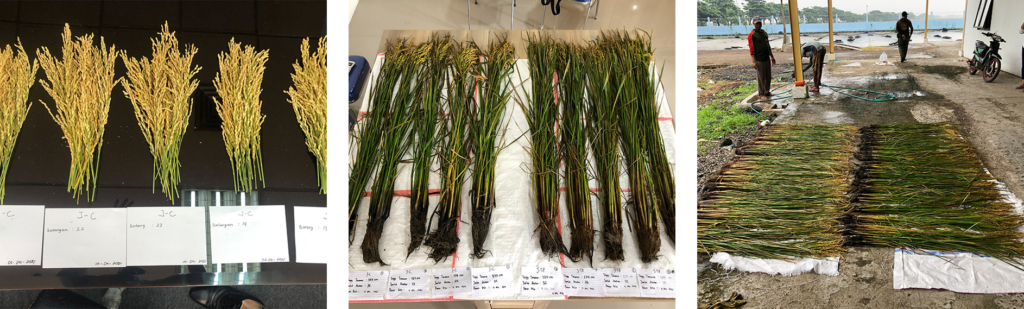
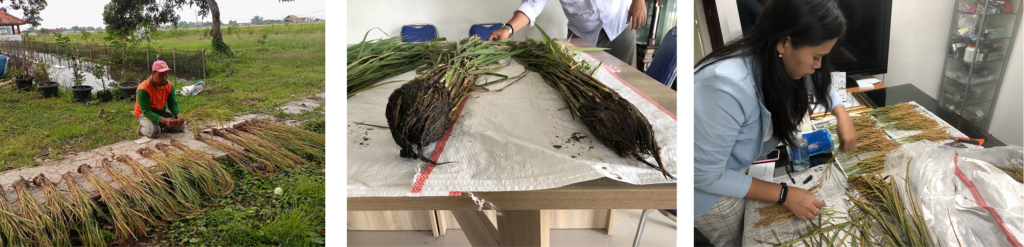
These comparative test results have been used
to improve subsequent cultivation practices.
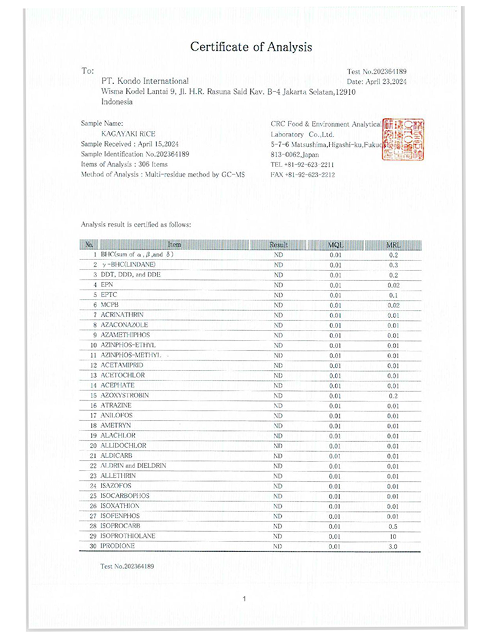
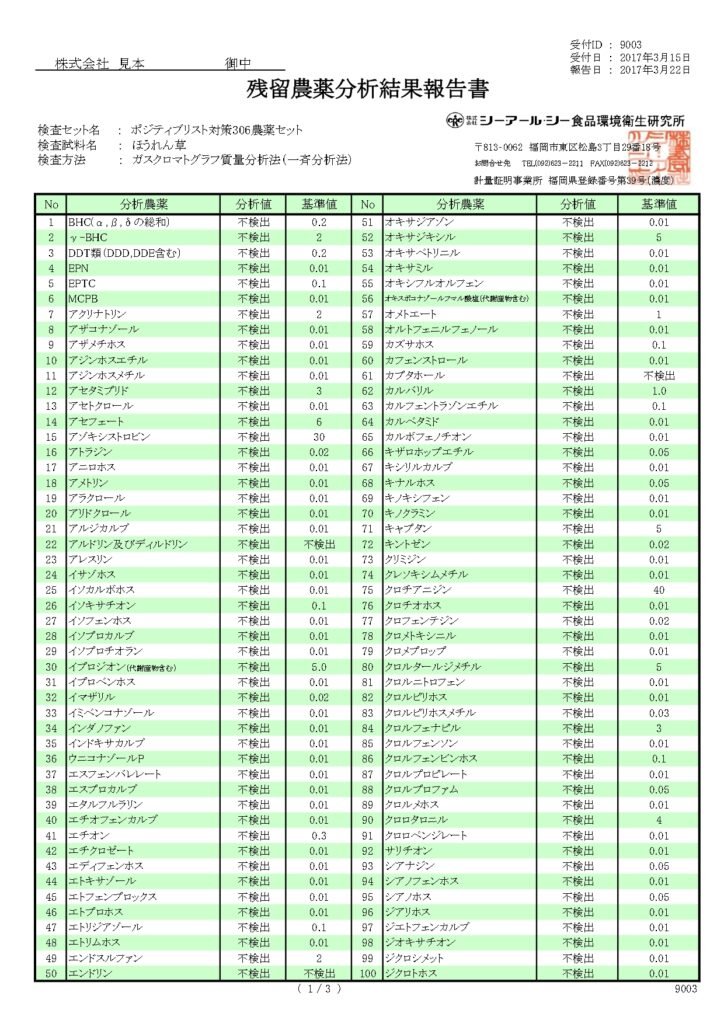
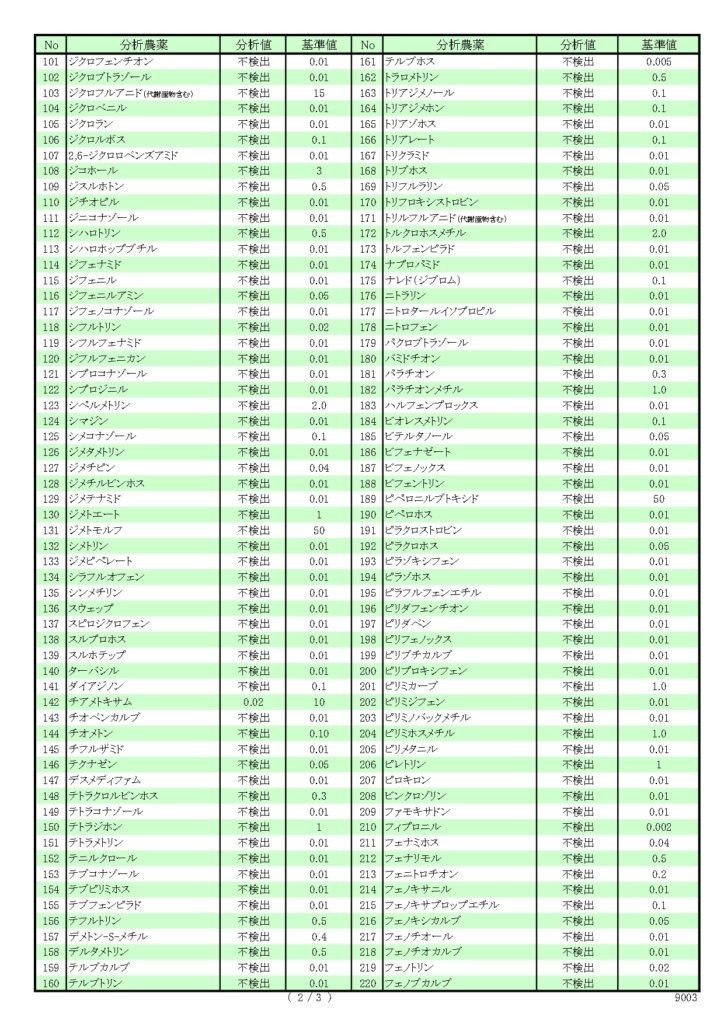
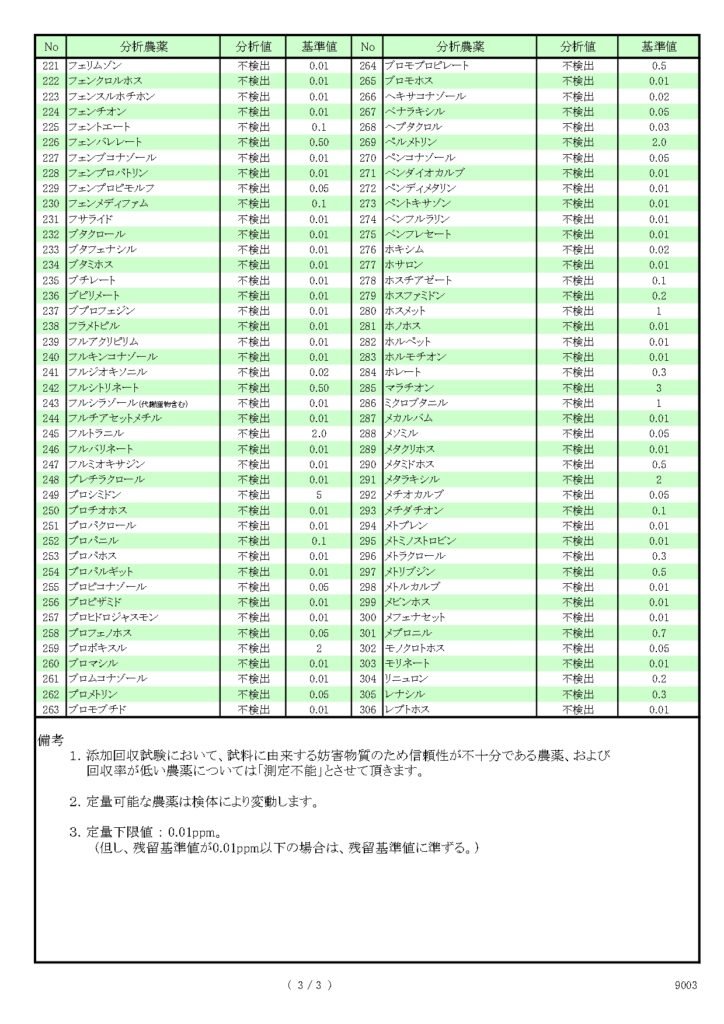
【 Simultaneous testing for pesticide residues 】
We conducted a comprehensive residual
pesticide test across 306 items in Japan.
The test results were “not detected,” proving
that there were no residual chemical
substances within this range of 306 items.
Kagayaki Rice is produced using
virtually no chemicals. Furthermore,
a soil conditioner derived from natto
bacteria, which decomposes chemical
substances remaining in the soil
during production, is applied.
In this way, Kagayaki Rice is produced
while simultaneously decomposing
past chemical substances.
A good farmer is someone who
sincerely thinks about their customers,
produces delicious agricultural products with
minimal use of chemicals, and faithfully
keeps their promises even without having
to state them in words.
The rice produced by such farmers
is an important food that helps maintain our health
and keeps our bodies in good condition.
“We cannot produce safe and high-quality rice
by reducing payments to farmers.”
“Protecting good farmers means protecting our customers.”
This is what we believe.
If we try to reduce the amount paid to farmers,
even by a small margin, farmers will inevitably use
morechemicals in order to increase their yield.
If the amount of chemicals consumed by
customers increases,nthe possibility of
customers becoming ill will also increase.
If we want farmers to produce truly excellent rice,
we must first ensure that farmers’ livelihoods
are properly protected, and then have them
produce rice that is both delicious and safe.
This is our philosophy, and we believe
it represents the true value of the rice
we provide to our customers.
Through our food products, we sincerely hope to
bring happiness to our customers, and at
the same time,we hope to contribute
to their health and well-being.
We proudly present Kagayaki Rice,
whose taste quality and health quality
have been improved through many years
of continuous refinement.
We sincerely appreciate your trust
and support for Kagayaki Rice.
【 Corrosion Test 】
Did you know that agricultural products
have the characteristic of being “less prone to
spoilage if grown healthily, and wilting and
shriveling after long-term storage”?
This decomposition test was conducted
with the aim of visualizing the degree of
spoilage of rice grown using chemical substances.
We tested Kagayaki rice and other brands
of Japanese rice simultaneously.
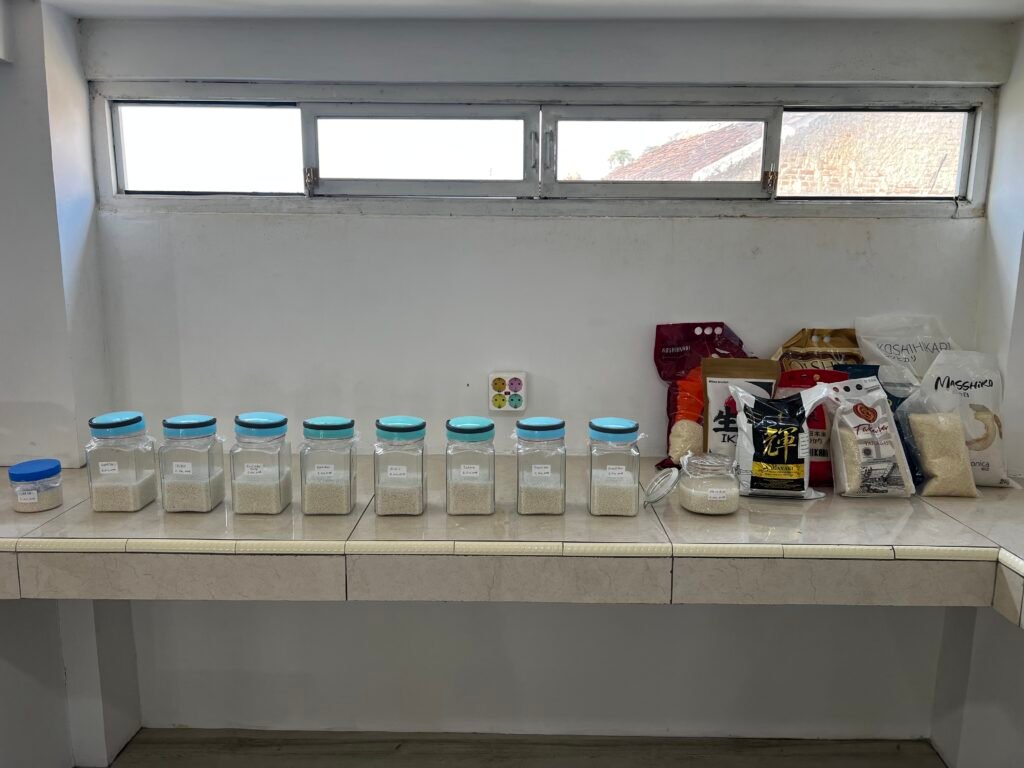
Corrosion testing began on October 5, 2024.
Test results showed that “Kagayaki”
remained white for an extended period,
but exhibited signs of deterioration such
as powdery texture. Many other brands
showed changes in color and signs of spoilage.

October 15, 2024 Corrosion test status

October 23 2024 Corrosion test status

October 26, 2024: Corrosion Test Condition
(The above photo is low-resolution to prevent
the names of other brands from being readable.)
【Long-term storage test】


Guarantee
If you experience any quality issues, we will replace
the item with a new one, regardless of the reason.

Purchase
A supermarket where you can buy Kagayaki rice.
1. Papaya Fresh Gallery
(Jakarta, Bandung, Surabaya, Bali)
2. Grand Lucky
(Jakarta, Tangerang, Bekasi, Bali)
3. Ranch Market
(Jakarta, Surabaya, Malang, Makassar,
Balikpapan)
4. AEON Mall
(Jakarta, Bogor, Tangerang, Sentul, Surabaya, Cikarang, JGC)
Customers experiencing difficulty purchasing items at the supermarket.
5. WhatsApp Shop
6. Shopee Official Store
7. Tokopedia/TikTok Shop
Contact us
1. Company Phone: 021-522-273
2. PIC 1 (Eko) Phone/WhatsApp: +62 812-9347-1423
3. PIC 2 (Kelvin) Phone/WhatsApp: +62 838-0861-2283
4. Email: ricedivision@ptkondo.com

Closing Remark
We are deeply grateful for the kind words
we have received from our customers:
“I have felt much better since I started eating Kagayaki Rice,”
“My two-year-old daughter happily eats this rice,”
“It tastes even better than the
Japanese rice I ate in Japan.”
These words of encouragement inspire our work.
The trust and warm words from our customers
are a testament to our quality and service.
Motivated by every message we receive,
we will continue to deliver authentic flavor
and the finest quality Japanese rice.
We sincerely hope you will remain a
loyal customer of Kagayaki Rice and that
this rice contributes to your well-being.
Thank you for your continued support.


PT. Kondo International
Titan Building, 4th Floor, Jl. Slamet Riyadi No. 7, RT. 1/RW. 4,
Kebon Manggis, Matraman District, East Jakarta.
Tel: +6221-522-2273 | Email: ricedivision@ptkondo.com